

Authority — Austin Tree Ordinance
Austin Tree Ordinance: A homeowner’s practical guide
Separate the rules from the routine. This page explains which trees are regulated in one- and two-unit residential yards, how diameter is measured, when a TORA review is required, where the ordinance applies, and what Iron Branch can do to help you document and apply without promising approval.
Central Texas / homeowner reference
A property guide for central texas / homeowner reference frames the questions that shape access, protection, timing, and the intended finish before a written scope.
01
Which trees the ordinance covers — the core facts
On single-family properties (one- and two-unit residential lots) the City of Austin does not regulate every tree. A key rule to remember is that trees under 19 inches in diameter at the standard measurement height are exempt from the ordinance on these residential properties. The City publishes these residential specifics; see the tree guidance for residential property at https://www.austintexas.gov/development-services/trees-residential-property for the official wording.
Protected and Heritage Trees are the categories that remain regulated. Diameter is measured at 4.5 feet above average grade — the standard DBH measurement used in local guidance. If you are unsure whether a tree on your lot is a Protected or Heritage Tree, treating the tree as regulated until you confirm with the City is the safest approach.
02
Where the ordinance applies and what it doesn’t
The Austin tree ordinance applies inside Full Purpose Austin and Limited Purpose Austin. It does not apply in the City’s extraterritorial jurisdiction (ETJ). These jurisdictional differences matter because permit rules and review processes follow municipal boundaries, and some properties that feel 'in Austin' are actually outside the ordinance’s reach.
Boundaries and zoning are subject to change; verify whether your address falls in Full or Limited Purpose Austin before you start work. The City of Austin’s development services and the City Arborist office are the authoritative contacts — you can start at the City’s tree webpages, including the City Arborist information here: https://www.austintexas.gov/development-services/city-arborist.
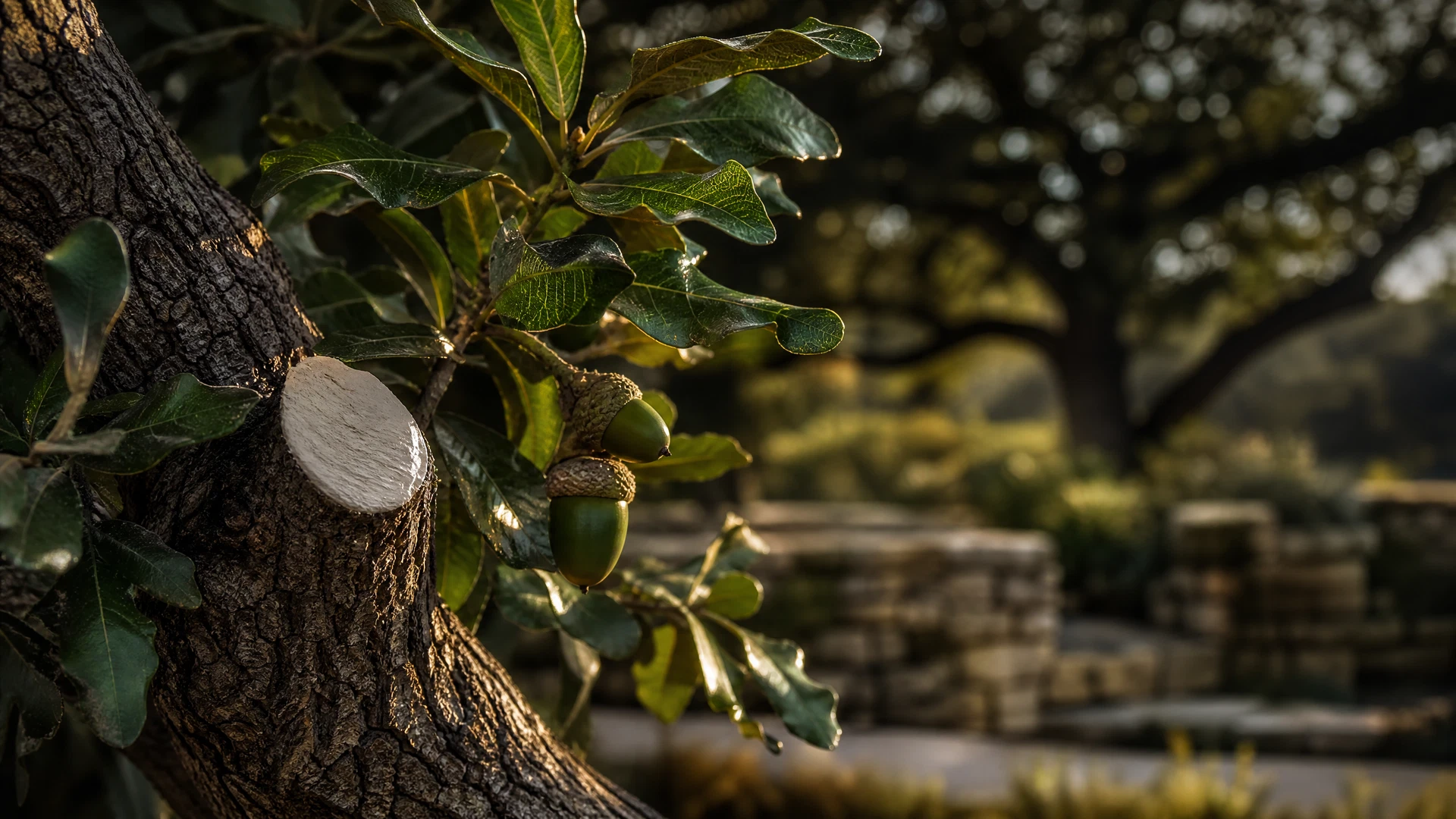
Property note
The property in context
Guidance is most useful when it helps a property owner ask a better question, recognize a reason to pause, and return to primary sources when conditions require confirmation.

03
When a TORA review is required
A TORA review — the Tree Ordinance Review Application process — is required when proposed work affects regulated trees. Specifically, TORA review is needed to remove a regulated tree, to prune 25% or more of a regulated tree’s canopy, or to disturb its critical root zone. These thresholds trigger administrative review so the City can confirm whether removal, large pruning, or root disturbance is allowable.
Importantly, a tree being dead, diseased, or classified as an imminent hazard does not automatically remove the permit requirement. The City’s guidance about dead, diseased, and imminent-hazard trees clarifies the review steps and conditions under which removal is permitted; see https://www.austintexas.gov/development-services/dead-diseased-and-imminent-hazard-trees for the official explanation. Treat notification and documentation as part of the process even when the tree appears clearly compromised.
04
A practical homeowner sequence: plan, document, apply, then work
Start by identifying the trees and taking basic measurements and photos. Note species (or best guess), trunk diameter measured at 4.5 feet above grade, and tree location relative to structures and property lines. That inventory is the primary document reviewers will want to see; it reduces surprises and speeds up conversations with the City and with any contractor you hire.
Next, confirm whether a TORA review is required for the work you want to do. If the project triggers TORA review, prepare the application package with clear photos, measurements, and a scope of work. Submit the application and wait for City direction before removing or cutting into canopies beyond the permitted threshold. If the work does not trigger TORA, you still should document the tree and the work, since hindsight documentation is often requested if neighbors or enforcement later raise questions.
05
Cost drivers and tradeoffs for Central Texas yards
On Central Texas properties the biggest scope drivers are tree size, access, slope, and proximity to structures or utilities. Larger trunks mean larger equipment, more labor, and more haul-away. Tight yards or steep lots increase rigging complexity and time on-site. Work that disturbs the critical root zone — such as trenching or certain landscape projects — can require mitigation measures that raise cost and planning time.
Timing and species matter too. Certain native oaks and other Central Texas species can be more sensitive to pruning timing — pruning during dry months or outside peak oak-vulnerable periods is a common practice to reduce risk of disease spread. If a tree sits close to energized lines, the utility company controls work on or immediately adjacent to those conductors; coordination with the utility can add schedule and cost. Always confirm utility clearance requirements and never attempt work on live lines yourself.
06
How Iron Branch helps — documentation, application support, and on-the-ground work
Iron Branch can measure trees at 4.5 feet, photograph and mark trees, and prepare the documentation you need to support a TORA submission. We can draft the scope of work, provide the measurements reviewers expect, and upload or hand-deliver the paperwork as requested. We will not promise approval — City review and final decisions are made by municipal staff — but we will help you present the strongest possible case.
If the City approves the work, our crews can perform removal, pruning, stump grinding, and haul away. We follow safe rigging and disposal practices and document completed work so you have a final record for house files or future permitting questions. To get started, call (512) 387-2671 or request a written quote and we’ll come out to inventory the trees and explain the application steps for your address.
Primary references
Check the source.
Municipal requirements and oak-wilt guidance can change. These are the official sources used for this page.
Considered answers
Straight answers about Austin Tree Ordinance: A homeowner’s practical guide
How do you measure tree diameter for ordinance purposes?
Diameter for the ordinance is measured 4.5 feet above average grade — the same standard used in City guidance. Measure the trunk circumference at that height and convert to diameter, or use a caliper if available. When multiple stems split below 4.5 feet there are specific counting rules; bring the tree to a site visit so the measurements can be recorded correctly.
Are small trees on my single-family lot regulated?
On one- and two-unit residential lots, trees under 19 inches in diameter at the 4.5-foot measurement are not regulated under the City ordinance. That means routine pruning and removal of those small trees will not normally trigger a TORA review. Always document the tree before work so you can demonstrate size if asked later.
If a tree is dead or diseased can I remove it without a permit?
A tree’s dead, diseased, or imminent-hazard condition does not automatically remove the permit requirement. The City has a process for handling such cases and you should follow the guidance at https://www.austintexas.gov/development-services/dead-diseased-and-imminent-hazard-trees. In many situations notification and documentation are needed before removal, and City staff may require inspection or approval.
What should I do about a tree that’s near power lines?
Work near energized lines belongs with the utility. Contact your utility to report hazards or request clearance. Contractors can coordinate with the utility, but they should not perform work on energized conductors themselves. Plan time and budget for utility coordination as part of any removal or large-pruning project close to power lines.
Can Iron Branch guarantee TORA approval or speed up City review?
No. Iron Branch can prepare measurements, photos, and a clear scope of work to present to City reviewers and can submit paperwork on your behalf, but the City controls approval and review timelines. We will help reduce back-and-forth by preparing thorough documentation, and we recommend confirming current processing expectations with the City Arborist office at https://www.austintexas.gov/development-services/city-arborist.
Private assessment
Begin with the property.
Tell us where the tree stands, what changed, and what it could reach. We will clarify the next step before work begins.
For urgent work, call (512) 387-2671