

Austin tree work along the I‑35 corridor
Tree care for Austin properties.
Practical, site‑specific tree work for mature oaks, pecans, and tight urban lots from Georgetown through Manor down past Buda.
Austin / local guide
A property guide for austin / local guide frames the questions that shape access, protection, timing, and the intended finish before a written scope.
01
Austin’s canopy and why site matters
Austin’s urban forest is a mix: mature live oaks and cedar elms on shallow limestone to the west of the central corridor and deep clay soils toward the east that hold water and long roots. Those soil and slope differences change how a tree moves water, how roots spread, and how a trunk will split or rot. We inspect soil, trunk stability, and crown structure because two trees that look similar from the street often need different work plans once we see root depth and slope.
Dense infill and narrow access are common. Tight side yards, shared fences, overhead power lines, and houses built close to trunks all increase the complexity and the cost of a job. We’ll identify clear practical constraints on the first visit so you know whether pruning, bracing, selective removal, or full removal is the right call for safety and long‑term health.
02
Pruning and crown work that respects Austin conditions
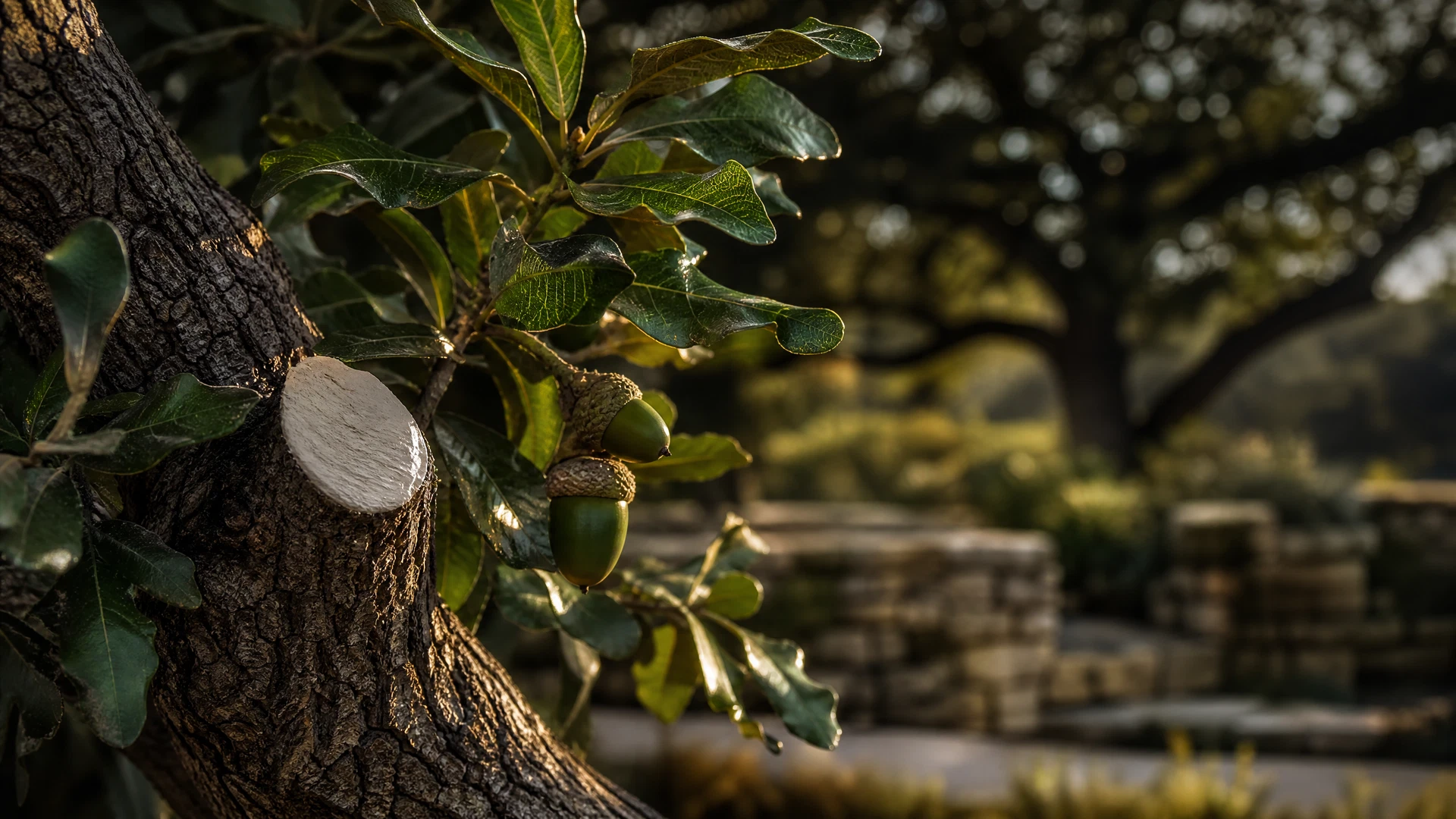
Pruning goals in Austin are commonly clearance for utilities, improving structure for older live oaks, and reducing wind sail on trees on slopes. We prune to remove hazardous branches, reduce canopy where appropriate, and maintain structure. On shallow limestone ridges we prune with an eye toward preserving root‑to‑crown balance; on heavy clay we watch for root collar issues and avoid excessive crown reduction that stresses trees already dealing with compacted soils.
Timing and method matter. For oaks, pruning timing and wound exposure are part of preventing spread of pathogens; we recommend specific timing and techniques and will refer you for oak‑wilt prevention guidance when a regulated process is required. For trees near energized lines, work belongs with the utility — we coordinate but do not perform line clearance on energized conductors.
03
Removals, hazards, and practical decision boundaries
Removal is the right choice when a tree is structurally unsound, irreparably compromised by pests or disease, or when its location threatens life and property. We assess the whole tree — trunk condition, rootplate, crown, and site constraints. If the tree can be made safe and healthy through targeted pruning and follow‑up care, we explain the tradeoffs. If removal is necessary we outline the safest method given access: ground‑based rigging, sectional dismantle, or crane work when a house or tight yard prevents straightforward removal.
Cost drivers are predictable: trunk diameter/height, location and access, proximity to structures and utilities, slope and soil conditions, required equipment (crane versus rigging), permit and disposal needs, and whether stump grinding is included. We never guess on scope over the phone — we do an on‑site estimate and encourage you to request a written quote before work begins.

Property note
The property in context
Local ground, growth, access, nearby structures, and municipal context can shape the work. The address is where the practical plan becomes clear.
From the property owner
“Excellent service. Great communications, skills and professionalism! Stuck to the quoted price and cleaned up afterwards. Will use again!”
04
Regulated trees and the City tree‑ordinance review
Austin has a tree‑ordinance process for regulated trees that can affect removals and larger pruning projects. Requirements and thresholds vary by property, tree species, and the proposed work. We prepare the documentation the City commonly requires — measurements, species identification, and project scope — and can submit paperwork on your behalf if you want. Confirm current requirements for your exact address before scheduling work; municipal rules change and we don’t replace that verification step.
If the City requires mitigation — replacement trees or requirements — we’ll explain options and scope. Some projects need a pre‑construction tree protection plan or post‑work inspections. We don’t issue permits ourselves, but we’ll coordinate the information the City asks for and help arrange planting or mitigation work once approvals are in place.
05
Stump grinding, roots, and planting after removal
Stump grinding is the usual path after a removal: it clears the surface hazard, reduces tripping and mowing issues, and makes the site ready for landscape reuse. Grinding depth and how we handle the grindings depends on your plan. On clay soils we often grind deeper and remove more material because re‑growth and root collars can remain active longer; on limestone or shallow soils we balance grinding depth with the risk of undermining surrounding turf or pavement.
If you want a replacement tree we select species suited to your micro‑site — soil depth, sun exposure, and overhead utilities. For oaks and other historically significant species we discuss longer‑term care and placement to avoid future conflict with structures. We’ll handle backfill, topsoil, and basic initial care for plantings if you want that added to the scope.
06
Storm response, safety, and cleanup
After a storm the immediate priorities are safety and stabilizing hazards. Don’t work near downed lines — that belongs to the utility — and don’t attempt to move large broken limbs that could shift or roll. We can respond to clear dangerous trees and branches; our crews stage work to protect access, mitigate further property damage, and separate debris for municipal or contracted pickup.
Emergency response scope are higher because the work is urgent and often requires overtime, specialized rigging, and expedited disposal. We document damage for insurance purposes on request and offer follow‑up pruning to remove storm‑damaged branches beyond immediate hazards. To schedule a triage visit or to request a written quote after a storm, call (512) 387-2671.
Where this work happens
Where this work happens in the Austin area
Considered answers
Straight answers about Austin
How much does tree removal or pruning cost in Austin?
There isn’t a single price because cost depends on specific factors: trunk diameter and height, proximity to structures and utilities, access (narrow yards or gated entries add time), slope and soil conditions, whether a crane or specialized rigging is required, permit and disposal needs, and whether stump grinding is included. We do not give accurate prices over the phone; schedule an on‑site assessment so you can request a written quote that lists each cost driver.
Do I need a permit to cut down or prune a tree in Austin?
Possibly. Austin’s tree‑ordinance applies to regulated trees and the thresholds depend on tree species, size, and location. Some pruning and emergency removals are allowed without a permit, while removals of regulated trees often require City review or mitigation. We prepare documentation commonly needed for permit applications, but you should confirm current requirements for your exact address before proceeding.
Can you work near power lines?
We do work around trees that are near overhead utilities, but any work on or immediately adjacent to energized conductors belongs to the utility. We coordinate with utility crews when required and schedule non‑utility work to avoid live‑line exposure. If power lines are a factor, we’ll explain the safest options and any additional scope for coordination.
How do you handle oak concerns like oak‑wilt?
We do not perform chemical treatments. For concerns about oak‑wilt or high‑risk oak pruning windows we advise timing and pruning practices to reduce risk and will refer you to qualified specialists when treatment or diagnosis is necessary. For regulated oaks the City may have specific rules about removal and disposal; we follow local rules and help with required paperwork or referral.
Private assessment
Begin with the property.
Tell us where the tree stands, what changed, and what it could reach. We will clarify the next step before work begins.
For urgent work, call (512) 387-2671