Veteran-owned tree service · Austin area24/7 tree emergency: (512) 387-2671
Iron Branch Tree Services Request an assessment
Menu
Services
Service areasReviewsOur standardContactRequest an assessment
Illustrative restored garden edge on a Central Texas property

Round Rock stump grinding

Stump grinding in Round Rock, finished well.

Remove leftover stumps without surprise scope. We explain how diameter, access, utilities, soil and rock affect what’s possible, what the crew will do, and how to plan for cleanup and replanting in Round Rock neighborhoods.

Round Rock / service guide

A property guide for round rock / service guide frames the questions that shape access, protection, timing, and the intended finish before a written scope.

01

What we mean by stump grinding and when it’s the right choice

Stump grinding uses a rotating cutting wheel to reduce the visible stump into wood chips and break up major roots near the trunk. It’s a removal method that leaves much of the roots in the ground, rather than ripping them out. That makes it faster, less disruptive to lawns and underground utilities, and usually cheaper than full excavations.

Grinding is appropriate when you want to clear the surface for lawn restoration, reduce tripping hazards, or prepare most sites for replanting. It isn’t always the right call where a full root removal is needed for structural reasons, where the stump sits inside a paved area, or when shallow rock means you can’t reach the root flare. We’ll describe those boundaries in the sections below so you know what to expect.

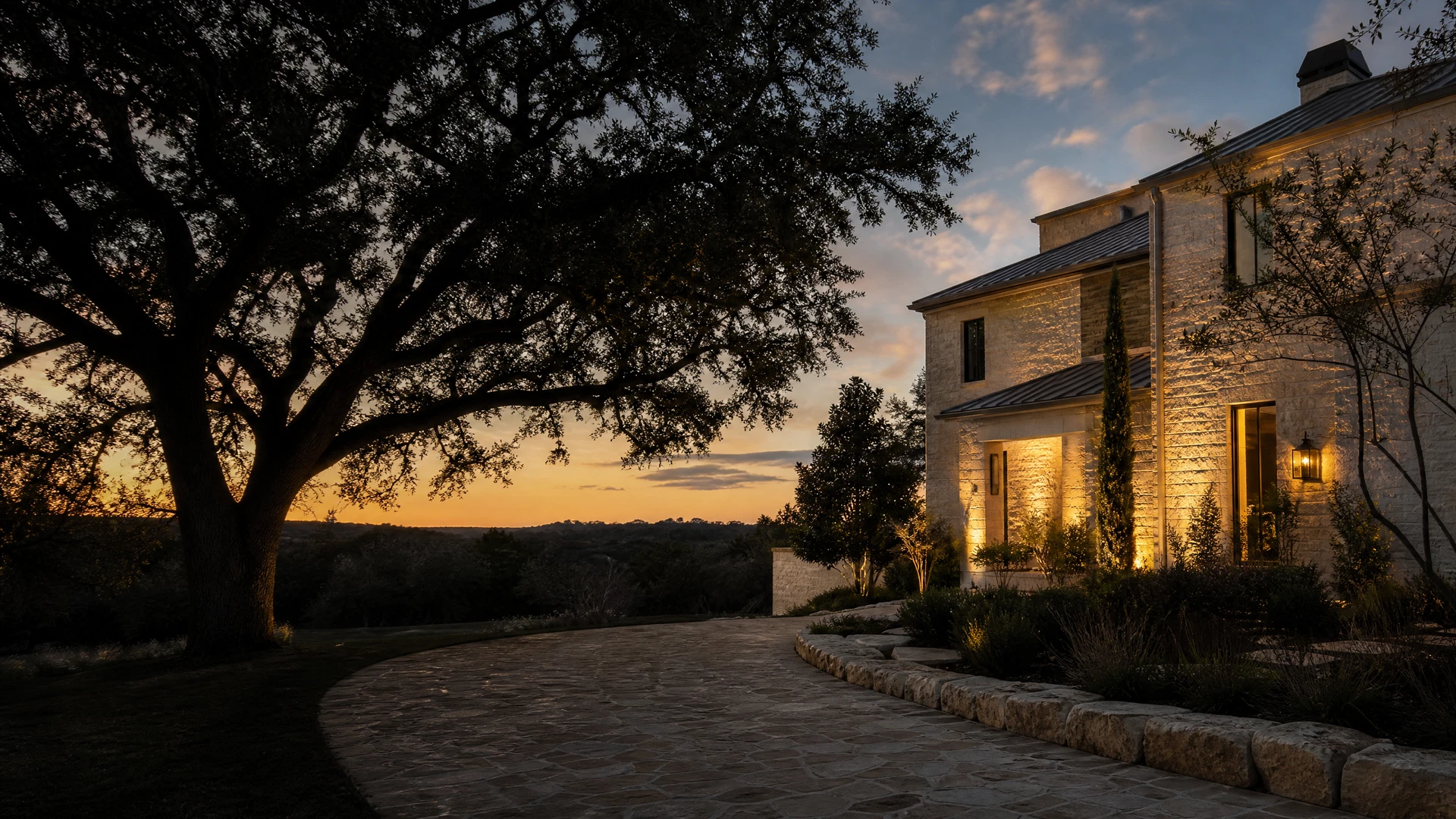
Illustrative Central Texas residential tree and property detail
Illustrative Round Rock site study — access and protection are planned before equipment arrives.

The work, in order

A controlled sequence from assessment to close

01

Site visit and assessment

We inspect the stump diameter, access path, nearby structures, surface roots, and any visible utilities. If the stump sits under or near electrical lines we pause and advise contacting Oncor; energized-line work belongs with the utility.

02

Written quote and permit check

We prepare a written quote that itemizes grind depth, chip handling, backfill, and any access charges. We’ll note whether a City of Round Rock residential permit is likely required and point you to the city portal to confirm.

03

Equipment setup and safety measures

On the scheduled day the crew positions the grinder, protects lawn and hardscape, and marks hazards. If space is tight we adapt with a smaller unit or partial disassembly of the stump.

04

Grinding, cleanup and backfill

We grind to the agreed depth or until rock prevents deeper cuts, remove or redistribute chips per the quote, and backfill and grade the hole with existing topsoil or imported screened soil when requested.

05

Final walkthrough and replanting advice

We walk the site with you, point out expected settling and replanting limits for the location, and leave written notes on future top-up needs and soil amendment recommendations.

Illustrative Central Texas residential tree and property detail

Property note

The property in context

A service becomes a real scope only when the tree is considered alongside the property, circulation, structures, protection, and material plan.

02

Diameter and access: how they shape cost and equipment

The diameter of the stump is a primary cost driver because it determines how much cutting and time the job will take and which grinder fits the job. Small ornamental stumps are quick with a walk-behind grinder; big live-oak trunks common in older Round Rock lots require larger self-propelled grinders or a staged approach with chainsaw work first. Machine size also affects surface disturbance — a bigger machine needs a clear route and more swing room.

Access matters in the neighborhoods and newer subdivisions around Round Rock. Tight alleys, fences, retaining walls, or narrow side yards can prevent truck-mounted grinders from getting close. Where access is restricted we’ll discuss alternatives: disassembling the stump to remove it in pieces, using a smaller unit, or relocating a grinder on a trailer. Those choices affect labor and time, which are reflected in the written estimate.

03

Grind depth and surface roots on Blackland clay and limestone-edge soils

Typical stump-grinding aims to get the stump 6–12 inches below grade so the remaining wood decomposes under soil. In Round Rock, Blackland clay and the limestone-edge pockets change that expectation. Shallow soil over limestone may prevent reaching that typical depth; the grinder will hit rock or extremely compacted clay sooner, and trying to force the grinder into rock risks damaging equipment or creating safety issues.

Surface and structural roots are another factor. Large live oaks, cedar elms, pecans and hackberries often have wide surface roots that extend into adjacent lawn or under driveways. Grinding can remove the root collar and main surface roots near the stump, but it won’t remove long lateral roots extending under structures. If those roots are a concern for foundations or walkways, we advise discussing options up front so the written quote reflects the agreed scope.

Illustrative Central Texas residential tree and property detail
Illustrative residential setting — controlled tree work protects the ground, structures, and circulation around it.

04

Chips, cleanup and backfill: what stays and what we take

After grinding the stump into chips, the pile of wood grindings can be handled several ways. We can chip and haul away wood grindings for disposal, leave them on-site for mulching, or use a portion to backfill the hole. In Blackland clay yards, using chips as loose top dressing can help cover the grind hole but won’t replace compacted soil needed for proper grading. We’ll recommend a cleanup plan that fits your lawn goals.

Backfill typically uses existing topsoil to level the depression left by grinding, and we’ll compact it to reduce settling. If your property has shallow limestone or poor topsoil, we may suggest bringing screened topsoil to avoid a hollow that collects water. Settling is normal — expect some additional sinking over the first growing season as wood decomposes. We’ll explain how much settling to expect in your quote and how to fix it if needed.

05

Permits, utility coordination and safety in Round Rock

The City of Round Rock has a residential tree-removal permit portal for certain projects; rules can vary by lot, tree size and location. Confirm current requirements for your address before work begins, especially in established neighborhoods where permits or arboricultural reviews may be required. We can point you to the portal and include permit-related notes in a written quote, but you should verify any city conditions that apply to your property.

Work near electrical lines requires coordination with Oncor. If a stump or stump removal lies under or beside energized lines, homeowners must contact the utility to de-energize or approve work near their lines — work on energized equipment belongs with the utility. We follow utility requirements and will pause work until any needed coordination is completed.

06

Replanting limits and post-grind landscape planning

You can replant over a ground stump, but there are practical limits. Because some wood and root mass remain below grade, the new tree’s roots may encounter decaying wood or voids, and the planting hole may be shallower than ideal. For small ornamentals and turf, replanting over a ground stump often works fine after adding quality topsoil. For new shade trees like live oaks or pecans, we generally recommend planting a safe distance from the grind site or removing additional material to create a proper root zone.

Plan for drainage and compaction when replanting on Blackland clay or limestone-edge soil. Clay can hold water and stunt young root systems; limestone can cause shallow rooting. We’ll discuss soil amendments and location choices during the site review so the written quote includes recommendations that fit your long-term landscape goals.

Considered answers

Straight answers about Round Rock

How deep will you grind a stump in Round Rock?

Typical grind depth is 6–12 inches below grade to allow the stump to decay and the surface to be restored. In Round Rock the depth may be limited by Blackland clay compaction or by hitting limestone bedrock; if rock is encountered the grinder cannot safely go deeper. We’ll state the expected grind depth in your written quote after a site visit.

Will grinding remove surface roots that extend into my yard or under the driveway?

Grinding removes the stump and nearby surface roots, but long lateral roots that extend under driveways or foundations can remain. Those roots often require targeted excavation or other measures. We’ll point out any roots we cannot reach and include options on the quote if additional removal is needed.

Do I need a permit and who do I contact about electrical lines?

Check the City of Round Rock residential tree-removal permit portal to confirm permit requirements for your address — requirements vary by neighborhood, tree size and location. For work near electrical lines, coordinate with Oncor; we will not work on energized lines and will pause until the utility has cleared or approved the area. Confirming both city and utility rules prevents delays.

How long before I can replant where a stump was ground?

You can plant small ornamentals or turf soon after grinding once the hole is backfilled and graded. For large shade trees, wait or consider planting a new tree at least several feet away because remaining decomposing wood and settling create unstable rooting conditions. We’ll advise on plant species and distance based on your soil (Blackland clay or limestone-edge) and the specific site conditions in your written quote.

Where this work happens

Where this work happens in the Austin area

AustinGeorgetownRound RockCedar ParkLeanderHuttoPflugervilleWells BranchSunset ValleyManchacaBudaManorTarrytownHyde ParkAllandaleCrestviewBarton Hills & ZilkerTravis HeightsCircle COak Hill

Private assessment

Begin with the property.

Tell us where the tree stands, what changed, and what it could reach. We will clarify the next step before work begins.

For urgent work, call (512) 387-2671

Your request is sent securely to Iron Branch. For an active emergency, call from a safe location.