
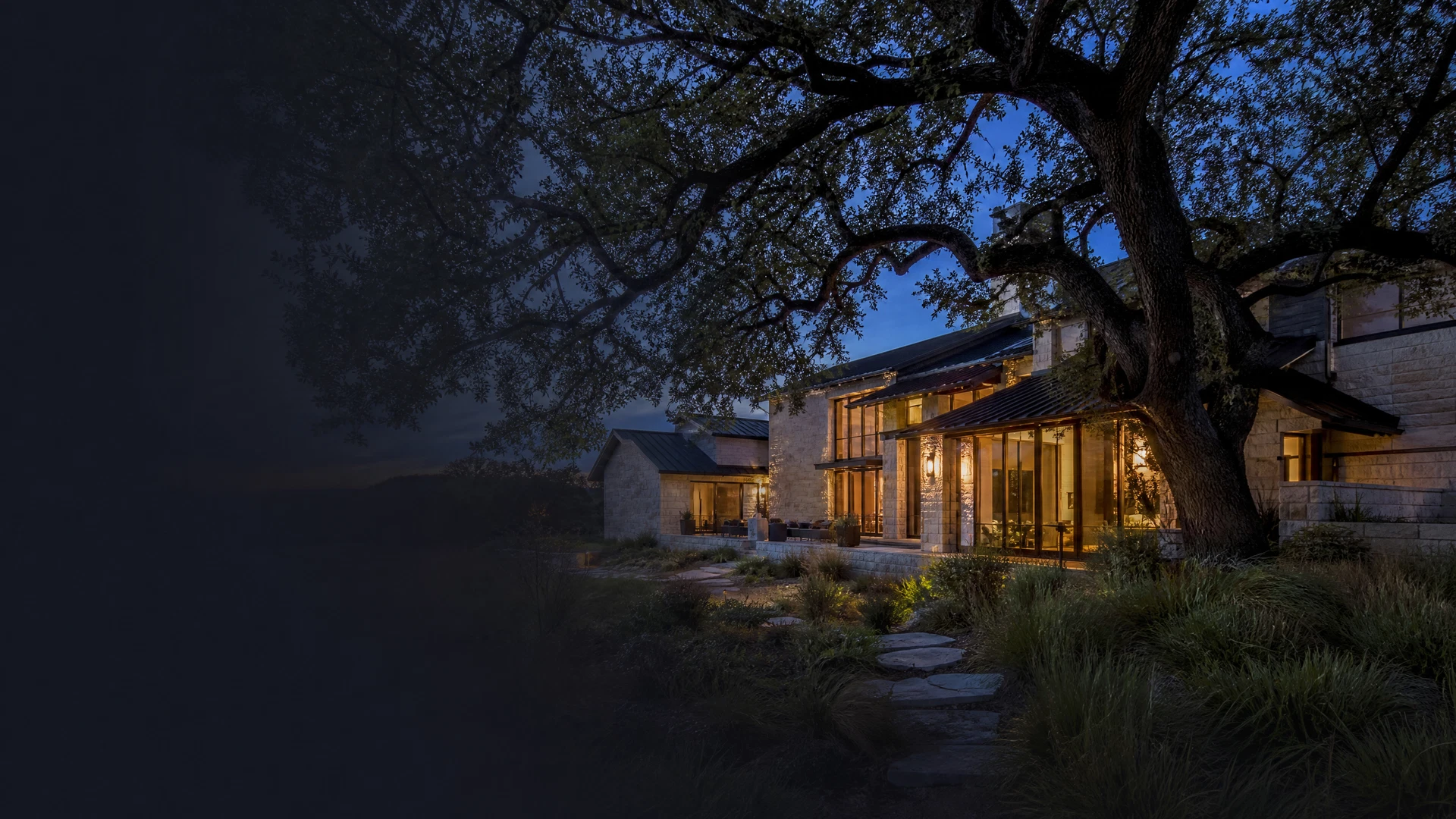
Local tree work for steep lots and high-use yards
Tree care for Barton Hills & Zilker properties.
Practical, site-specific tree work for limestone slopes, thin soils, drainage channels, and mature live oaks — planned for pools, decks, and narrow access.
Barton Hills & Zilker / local guide
A property guide for barton hills & zilker / local guide frames the questions that shape access, protection, timing, and the intended finish before a written scope.
01
Site evaluation: slopes, soils, and where people live
Barton Hills and Zilker properties come with specific constraints: limestone outcrops, thin soils over bedrock, and drainage channels that concentrate runoff. Our initial on-site evaluation documents slope angles, access routes, hardscape like pools and decks, and the presence of mature live oaks and Ashe juniper. That tells us whether a straightforward prune, a staged sectional removal, or a larger rigging plan is needed.
We pay special attention to the tree root-zone on shallow soils. Roots may spread laterally under thin soil and surface rock; heavy equipment or deep trenches can harm those roots and destabilize a tree or nearby hardscape. We’ll note potential conflicts with drainage and recommend work that protects foundations, retaining walls, and pool shells, and confirm any permit or HOA requirements for your address before starting.
02
Pruning and crown work for mature live oaks and Ashe juniper
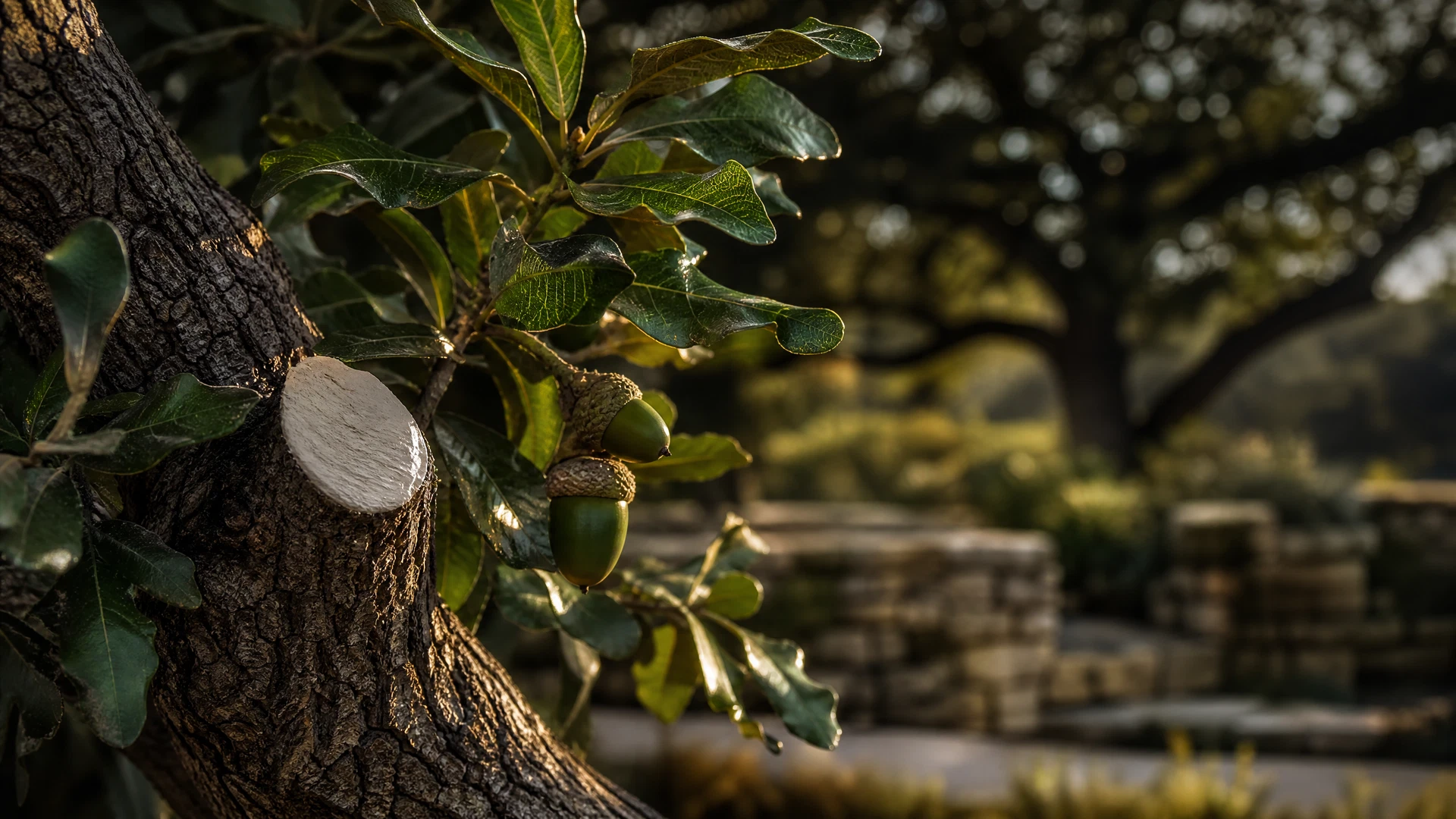
Pruning in this neighborhood requires a careful balance: maintain crown health and structure without over-pruning trees that are adapted to dry, thin soils. For mature live oaks we focus on selective thinning to reduce weight on long limbs, removing deadwood, and pruning back to sound lateral branches where necessary. For Ashe juniper we remove crossing limbs and excessive dense material that can stress surrounding trees and create excessive ladder fuel.
Because oak-wilt is a concern regionally, our pruning approach follows best practice avoidance for high-risk periods and wound management; we can explain prevention and recommend a specialist for any suspected oak-wilt cases. We do not provide chemical disease work or oak-wilt diagnosis — we limit our scope to pruning practices, timing, and removal when necessary, and we can refer you to tree health specialists.
03
Removals and sectional dismantling on steep or narrow lots
When a tree must come down near a pool, deck, or tight property line, we plan sectional dismantling rather than a single drop. On slopes and narrow access lanes we rig branches and trunk sections to lower them to a safe footprint without damaging pools, roofs, or landscaping. That work requires a ground crew managing lines, anchor points, and a clear landing area for each cut.
Cost drivers for removal include tree size, proximity to structures, slope and access difficulty, and the need for specialized rigging or crane placement. We'll outline those drivers in your written quote so you can see why a removal on a flat backyard differs from a removal on a limestone slope above a pool.
Property note
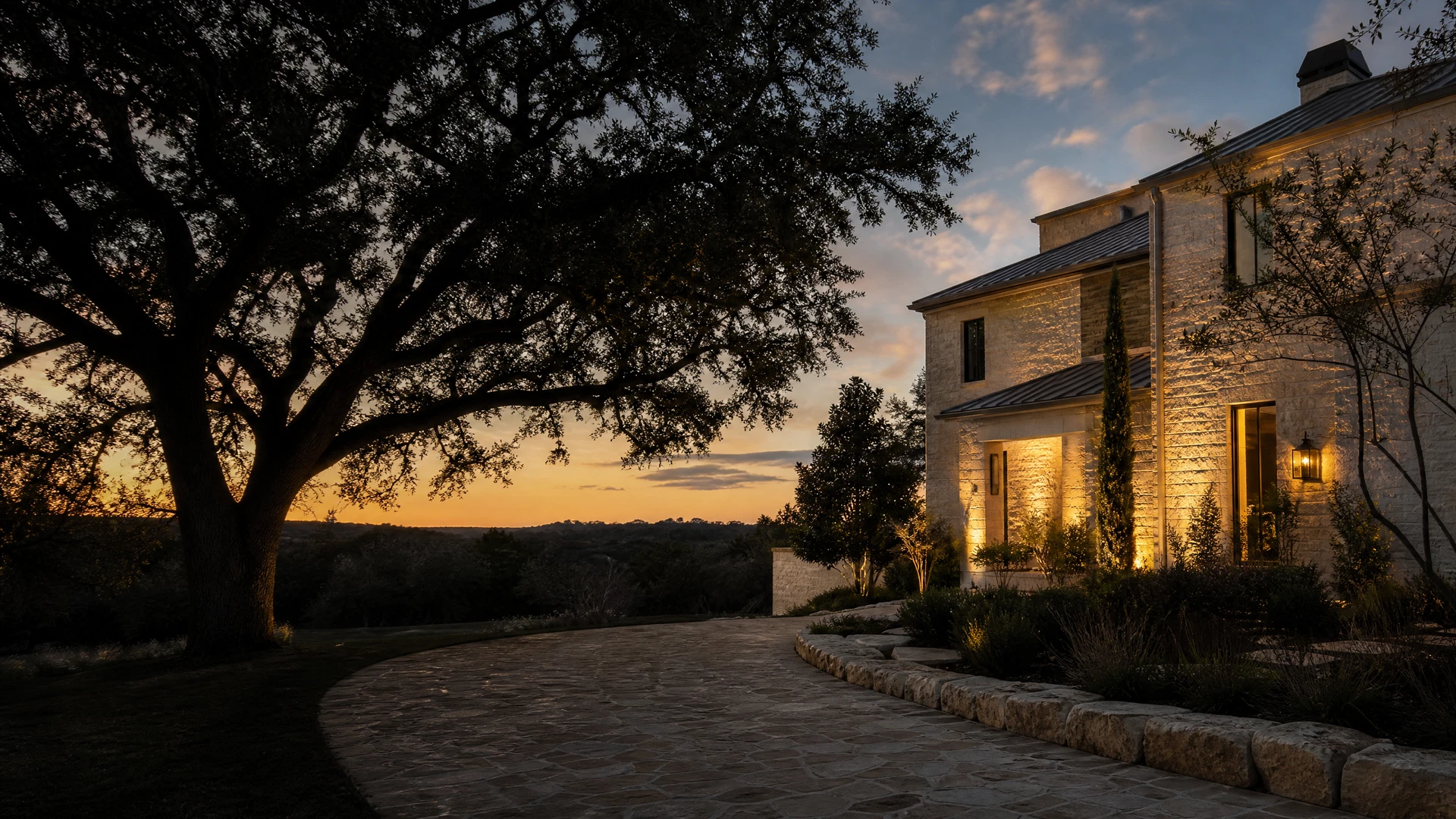
The property in context
Local ground, growth, access, nearby structures, and municipal context can shape the work. The address is where the practical plan becomes clear.
From the property owner
“James was knowledgeable and thorough with the best approach to preserve the trees during the hot Summer months. Great job!”
04
Root‑zone protection, soil care, and drainage repair
Thin soils over limestone mean roots often run shallow and wide; root damage from digging, trenching, or heavy machinery is the most common way trees decline after work is done. Our crews mark and protect the critical root-zone during any job, use low-ground-pressure equipment where possible, and avoid unnecessary excavation. If soil compaction or erosion is present, we can recommend targeted aeration, mulching, and erosion control measures to stabilize the slope and retain moisture.
Drainage channels in this area can be concentrated during storms. We will identify surface flow paths and recommend rerouting, small retaining features, or plantings that reduce undercutting at tree bases. For major grading or structural repairs you should confirm current permitting requirements for your address with the city before work begins.
05
Rigging, access planning, and protecting pools and decks
Rigging in Barton Hills and Zilker is rarely standard because many yards have pools, decks, and outdoor living areas immediately adjacent to large trees. Our planning draws a path from crown to disposal area, selects anchor points, and plans cut sequencing so that each lowered limb clears hardscapes. When access is too narrow for wheeled equipment we stage smaller lifts and hand-line work to move material safely.
If work approaches energized lines we will not perform the task; work near energized lines belongs with the utility. For any job close to lines we’ll advise contacting the utility and we’ll coordinate with them as needed. We also discuss protection for plastered pool shells and decking finishes so you understand the trade‑offs of different removal or limb management options.
06
Decision boundaries: prune, protect, or remove
Choosing to prune, protect, or remove a tree depends on risk, health, site constraints, and homeowner goals. Pruning is often preferred when the tree has good structural form and the work will reduce failure risk without compromising long-term health. Removal is the responsible choice when roots or trunk have significant decay, when a tree has a high probability of failure into a pool or structure, or when ongoing conflicts with utilities or building foundations cannot be resolved.
We explain the trade-offs on site: saving a marginal tree may require repeated follow-up and monitoring, while removal avoids future emergency work but changes shade and drainage patterns. For any property work you should confirm current local permit and heritage tree requirements for your address; we will identify likely permitting needs and include them in your quote so you can request a written quote and decide with full information.
Where this work happens
Where this work happens in the Austin area
Considered answers
Straight answers about Barton Hills & Zilker
How do you price removals on steep limestone slopes?
Price depends on tree size, slope angle, access, proximity to pools/decks, and the need for rigging or crane work. Steeper slopes and narrow access increase labor and time because we use sectional removals, additional crew for hand-lowering, and extra safety gear. Your written quote will list those specific line items so you can see what’s driving cost.
Can you prune live oaks year-round in Barton Hills?
We avoid high-risk pruning periods if oak-wilt is a concern and follow wound-minimizing practices; timing matters. For non-oak species pruning can often be done year-round, but for mature live oaks we discuss the best window during an on-site evaluation. We do not offer chemical disease work or oak-wilt diagnosis—if oak-wilt is suspected we will refer you to a tree health specialist.
Will you work near my pool and protect the decking?
Yes. Protecting pools, decks, and outdoor finishes is part of the plan. We design cut sequences and rigging to avoid direct impacts and use protective padding and barriers as needed. Some surfaces are still vulnerable to incidental contact, and we’ll explain trade-offs and any additional scope required to increase protection levels in your written quote.
Do you handle work near power lines?
Work that involves energized conductors belongs with the utility. We will identify and flag any energized-line issues during the evaluation and advise contacting the utility to de-energize, trim, or provide clearance. For de-energized or non-energized line work we can coordinate with the utility or perform the agreed work once the utility has completed their portion.
Private assessment
Begin with the property.
Tell us where the tree stands, what changed, and what it could reach. We will clarify the next step before work begins.
For urgent work, call (512) 387-2671