
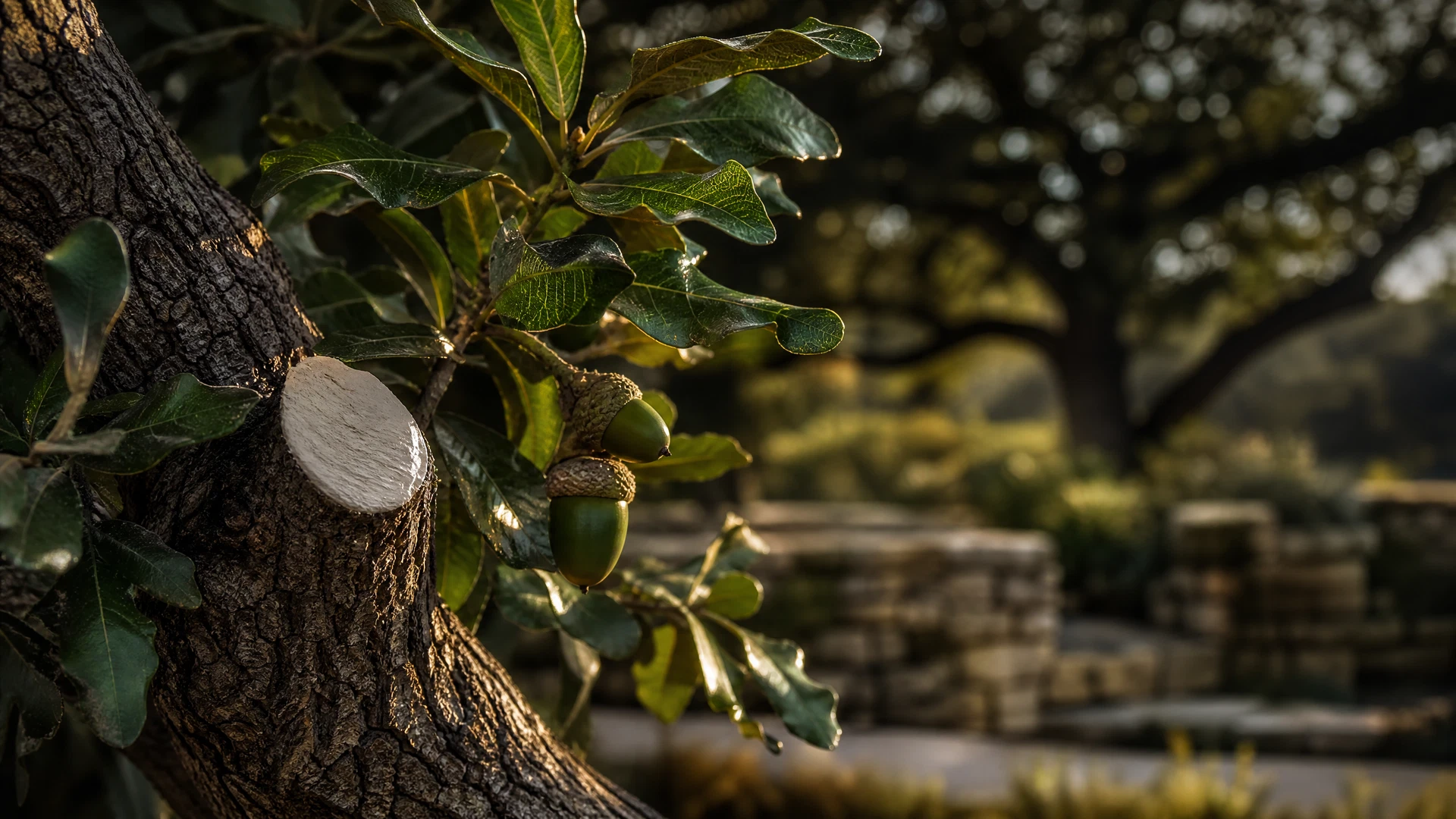
Oak Hill — slopes, limestone, and wildfire awareness
Tree care for Oak Hill properties.
Equipment access, long drives, rocky soils and dense juniper change how we prune, remove and clear. We plan around your lot, fence lines and safety to reduce risk and keep work local and straightforward.
Oak Hill / local guide
A property guide for oak hill / local guide frames the questions that shape access, protection, timing, and the intended finish before a written scope.
01
What makes Oak Hill different for tree work
Oak Hill's terrain matters. Limestone outcrops, shallow soils and steep grades affect root systems and how trees respond to cuts or removals. Live oaks and cedar elms are common on those flats and benches, while dense stands of Ashe juniper dominate draws and unplanted slopes. Those species and the ground conditions change what crews can do safely and how trees recover.
Many Oak Hill properties are larger lots mixed with newer subdivisions. Long driveways, miles of fence line, private access roads and tight gate openings are all normal. Because of that, a standard bucket truck or large chipper sitting on flat ground isn't always an option. We plan for uphill rigging, hand-fed chippers, and extra labor for haul-out on steep grades so the work is safe and predictable.
02
How we assess a property and make a plan
Start with a thorough on-site assessment. We walk property lines, check driveway grades and gate clearances, note fence lines and underground utilities, and look at tree species, wound history and root exposure on limestone slab. If your property has HOA or city restrictions, confirm current requirements for your address and project — regulations change, and permits may be required for removals or large pruning jobs.
We make a written plan that identifies access constraints, the rigging or equipment we'll need, potential removal or pruning zones, and disposal options. If any work is near energized lines, that work belongs with the utility — we will coordinate and tell you when you must contact them. For oak-wilt concerns we follow prevention-minded pruning windows and removal/disposal practices and will refer you to a specialist when diagnostic guidance and referral options are required.
03
Pruning and maintenance that fits the site
On slopes and shallow soils we favor conservative structural pruning over aggressive topping. For live oaks and cedar elms that means removing dead wood, correcting included bark, and selective thinning to reduce weight and wind sail while preserving canopy health. When trees sit above limestone or have limited root spread, heavy crown reductions can destabilize them; we'll explain the tradeoffs before we cut.
Pruning near fences, long drives or overhanging structures is practical work: clearing clearance for vehicles, shaping branches away from rooflines, and staging debris removal for long haul-outs. Because access often dictates the tools we use, expect more hand work, pole saws and rope work on Oak Hill properties rather than relying solely on large aerial lifts.
Property note
The property in context
Local ground, growth, access, nearby structures, and municipal context can shape the work. The address is where the practical plan becomes clear.
From the property owner
“Excellent service. Great communications, skills and professionalism! Stuck to the quoted price and cleaned up afterwards. Will use again!”
04
Removals, rigging and stump work on difficult slopes
Removing a large tree on a steep, rocky lot requires staged rigging and careful piece-by-piece lowering. Where a large crane can't reach, we use block-and-tackle systems or controlled rope rigging and smaller chippers positioned on level sections. That approach scope more in time and labor than a typical flat-lot removal; the extra is for safety and preventing collateral damage to fences, drives and utilities.
Stump grinding on shallow limestone is different, too. Grinding depth is limited by rock; we discuss options like partial grind, removal of exposed root collars and cleanup for future planting. Disposal of wood and chipping is planned around driveway length: long haul distances or multiple drop-offs add to the job cost and timeline.
05
Lot clearing, wildfire fuel reduction and fence-line strategies
Wildfire-fuel awareness is central in Oak Hill. Dense Ashe juniper and accumulated ladder fuels under oaks create continuous fuel beds. Our approach combines selective removal of juniper thickets, pruning of lower limbs on larger trees, and targeted thinning to create defensible space while preserving desirable shade trees. We won't clear a property to bare dirt; instead we tailor fuel reduction to the site and your priorities.
Fence lines and long property boundaries often hide woody debris and volunteer trees that create ignition paths. We clear and chip to a homeowner-specified width, flag utilities, and discuss erosion control on slopes. Confirm local brush and burn regulations before work begins — some areas restrict disposal or require specific stacking and removal methods.
06
Costs, decision boundaries and what we won't do
Cost drivers for Oak Hill jobs are consistent: slope and rockiness, access and length of driveway, tree species and size, fence-line complexity, debris volume, and whether permits or utility coordination are necessary. A flat lot with easy access can be priced on a per-tree basis; a steep, rock-laden removal with long haul-out is priced on time, equipment and crew size. We always explain these line items in the written quote so you know why a job scope what it does.
We set clear decision boundaries. Work next to energized lines must be handled by the utility; we won't perform tree work that requires the utility to de-energize lines unless the utility has been contacted and given clearance. We do not diagnose tree disease from photos — we'll inspect in person and, when a disease like oak-wilt is suspected, explain prevention-minded pruning timing, removal and disposal options and refer to specialists for treatments that fall outside our scope. If you want to move forward, call (512) 387-2671 or request a written quote and we'll schedule a site visit.
Where this work happens
Where this work happens in the Austin area
Considered answers
Straight answers about Oak Hill
Do you prune live oaks during the summer?
We follow oak-wilt-aware pruning practices. In many cases pruning live oaks during high-risk periods increases oak-wilt exposure; we recommend summer pruning only when necessary for safety or immediate clearance, and follow specific wound and disposal practices. For elective structural pruning, we discuss timing that lowers risk and may refer you to a specialist if treatments are being considered.
Can you remove a tree on a steep, rocky slope without a crane?
Yes, often we can by using rope rigging, block-and-tackle systems and staged lowering with hand-fed chippers placed on accessible benches. That approach uses more crew time and specialized rigging gear, which affects cost, but it avoids bringing a crane down a long, steep driveway when that's impractical.
Will you work near power lines?
We will not perform work that requires de-energizing lines — work near energized lines belongs with the utility. We can contact the utility on your behalf to request de-energization or an on-site coordination, and we handle the tree work once the utility provides a safe condition or authorization.
How should I prepare my property before the crew arrives?
Clear vehicle access to gates and make sure gates are unlocked or provide a temporary code. Move fragile items, hoses and outdoor furniture away from work areas. If the job affects driveways or private roads, let us know about parking and whether staging on a neighbor's property is allowed. If permits are required, confirm approval before the scheduled start; we can advise but you should confirm current requirements for your address.
Private assessment
Begin with the property.
Tell us where the tree stands, what changed, and what it could reach. We will clarify the next step before work begins.
For urgent work, call (512) 387-2671